A 3D Microscope is an advanced imaging instrument that allows scientists, researchers, and engineers to observe microscopic objects in three-dimensional detail. Unlike traditional microscopes that produce flat two-dimensional images, a
3D Microscope creates a realistic spatial representation of tiny structures, revealing depth, texture, and surface variations with exceptional clarity. This advanced technology has become a vital tool in fields such as biomedical research, electronics inspection, materials science, and nanotechnology.
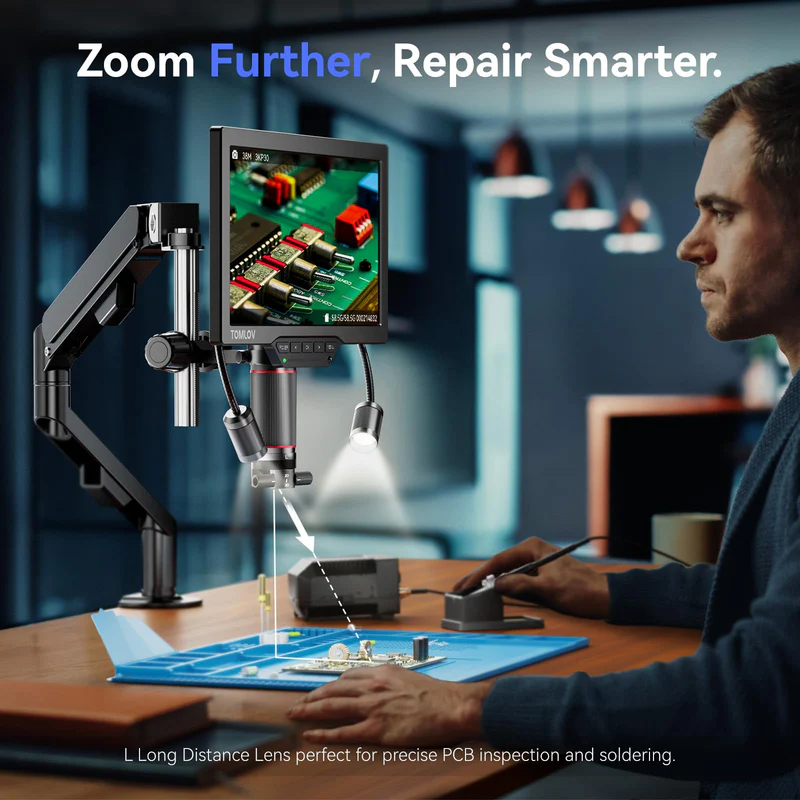
As modern industries demand higher precision and more accurate microscopic analysis, the 3D microscope has emerged as a powerful solution for detailed imaging and structural evaluation. It combines optical systems, digital sensors, and software-based reconstruction techniques to deliver accurate 3D visualization of microscopic samples. From analyzing biological cells to inspecting microchips, this technology has significantly improved the way microscopic data is studied and interpreted.
3D Microscope Imaging Technology
A 3D Microscope operates using advanced imaging techniques that capture multiple layers and angles of a microscopic object. Instead of producing a single flat image, it collects a series of images at different focus depths and then combines them into a complete three-dimensional representation.
Techniques such as stereo imaging, focus stacking, and digital reconstruction are commonly used in modern 3D microscopy systems. These technologies allow users to rotate, zoom, and analyze objects from multiple perspectives, providing a deeper understanding of their structure and composition.
High-resolution optical lenses and digital sensors play a crucial role in producing sharp and accurate images. LED lighting systems further enhance visibility by improving contrast and highlighting fine surface details that are essential for scientific and industrial analysis.
Scientific Research Applications
A 3D Microscope is widely used in scientific research across disciplines such as biology, chemistry, physics, and nanotechnology. In biological research, it enables scientists to study cells, tissues, and microorganisms in three dimensions, providing a more accurate understanding of their structure and behavior.
In materials science, 3D microscopy is used to examine surface morphology, fracture patterns, and microstructural composition of metals, polymers, and composites. Researchers can analyze how materials respond to external forces, temperature changes, and environmental conditions by studying their internal structure in detail.
Nanotechnology research also relies heavily on 3D microscopes, as they provide the ability to visualize and manipulate structures at the nanometer scale. This precision is essential for developing advanced materials and micro-engineered devices.
Industrial Inspection and Manufacturing Use
In industrial environments, a 3D Microscope plays a key role in quality control and inspection processes. Electronics manufacturers use it to examine printed circuit boards, microchips, and semiconductor components for defects, misalignment, and structural issues.
The ability to view components in three dimensions allows engineers to detect surface irregularities, soldering defects, and manufacturing inconsistencies with high accuracy. This ensures that products meet strict quality standards before reaching consumers.
In automotive, aerospace, and precision engineering industries, 3D microscopes are used to inspect small and complex components where even minor defects can impact performance and safety. This makes them essential tools in modern manufacturing systems.
Medical and Biomedical Imaging
A 3D Microscope is also widely used in medical and biomedical fields for advanced diagnostic and research applications. It allows healthcare professionals and researchers to examine tissues, cells, and biological samples in a realistic three-dimensional format.
In pathology, 3D imaging helps identify abnormalities in tissue structures that may not be visible with traditional microscopy. This improves diagnostic accuracy and supports early disease detection.
Biomedical researchers use 3D microscopes to study cell behavior, drug interactions, and genetic structures. The detailed visualization helps in developing new treatments and improving healthcare technologies.
Digital 3D Microscope Systems
Modern 3D Microscope systems are often integrated with digital technology, allowing users to view, capture, and analyze images on computers or digital displays. These systems provide greater flexibility and improved data handling capabilities.
Digital 3D microscopes enable image storage, sharing, and collaborative research, making them valuable tools in laboratories and research institutions. Advanced software allows users to measure distances, analyze surface profiles, and generate accurate 3D models of microscopic samples.
This digital integration enhances efficiency and makes 3D microscopy more accessible in education, industry, and scientific research.
Optical Depth and Spatial Accuracy
One of the most important advantages of a 3D Microscope is its ability to provide precise depth perception. Unlike traditional microscopes that produce flat images, 3D systems reveal height variations and surface contours with high accuracy.
Stereo imaging technology mimics human binocular vision, creating a natural three-dimensional effect that helps users understand spatial relationships between microscopic structures.
This depth accuracy is particularly important in semiconductor inspection, biological analysis, and material science research, where structural precision is critical.
High-Resolution Imaging Performance
A 3D Microscope offers high-resolution imaging that captures even the smallest microscopic details. This includes micro-cracks, surface textures, and structural imperfections that are often invisible under standard microscopes.
Advanced optical systems combined with digital sensors ensure sharp and clear images at different magnification levels. This level of detail enables researchers and engineers to make accurate observations and informed decisions.
The ability to zoom deeply into microscopic structures without losing clarity makes 3D microscopes superior tools for advanced analysis.
Educational and Training Applications
A 3D Microscope is widely used in educational institutions to enhance science learning. It allows students to visualize microscopic structures in three dimensions, making complex concepts easier to understand.
Interactive 3D imaging improves engagement and provides practical learning experiences in subjects such as biology, chemistry, and material science. Students can explore cells, minerals, and microstructures in detail.
Training programs in medical and engineering fields also use 3D microscopes to provide hands-on experience with advanced imaging techniques.
Selecting the Right 3D Microscope
Choosing the right 3D Microscope depends on the application and level of precision required. Entry-level models are suitable for educational purposes, while advanced systems are designed for professional research and industrial inspection.
Key factors such as magnification range, image resolution, lighting quality, and software capabilities should be carefully evaluated. High-end models offer real-time 3D rendering, measurement tools, and advanced image processing features.
Selecting the right microscope ensures accurate results, improved efficiency, and long-term reliability.
Conclusion
A 3D Microscope represents a major advancement in microscopic imaging technology, offering detailed three-dimensional visualization that enhances scientific research, industrial inspection, medical diagnostics, and education. Its ability to provide depth, clarity, and high-resolution imaging makes it an essential tool in modern laboratories and industries.
From studying biological cells to inspecting electronic components and analyzing advanced materials, the 3D microscope continues to revolutionize microscopic analysis. As technology evolves further, it will remain a key instrument for precision, innovation, and scientific discovery in the microscopic world.


