Understanding tack welding types and uses is essential for anyone involved in metal fabrication, construction, automotive repair, or industrial manufacturing. Tack welding is the process of creating small temporary welds that hold metal components securely in place before the final weld is completed. Although these welds are temporary, they are one of the most important steps in producing strong, accurate, and long-lasting welded structures.
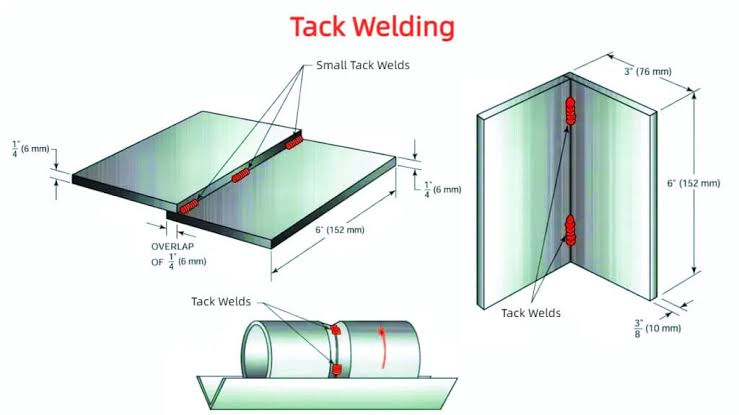
Different tack welding types and uses are designed to meet specific fabrication requirements. The right tack welding method helps maintain proper alignment, reduces heat distortion, prevents movement during welding, and improves the overall quality of the finished joint. Whether working with carbon steel, stainless steel, aluminum, or sheet metal, selecting the appropriate tack welding technique allows welders to complete projects more efficiently while maintaining professional standards.
Modern industries rely heavily on tack welding because accurate positioning is critical before permanent welding begins. A properly placed tack weld reduces the risk of misalignment, minimizes expensive repairs, and improves productivity throughout the fabrication process. Learning about tack welding methods also helps beginners develop better welding habits while allowing experienced professionals to achieve more consistent results.
Popular Tack Welding Types and Uses for Better Weld Quality
The various tack welding types and uses are selected according to material thickness, joint design, and fabrication requirements. Standard tack welding is one of the most commonly used techniques, where small tack welds are evenly spaced along the joint to secure components before final welding. This method helps distribute heat evenly while maintaining dimensional accuracy throughout the project.
Bridge tack welding is frequently used when there is a slight gap between two metal pieces. The tack weld temporarily bridges the opening, keeping the joint stable until the permanent weld completely fills the gap. This technique is widely applied in structural steel fabrication and pipe welding because it maintains correct joint spacing during assembly.
Chain tack welding is another effective method used on long weld joints. Instead of relying on only a few temporary welds, multiple tack welds are placed along the length of the joint to provide additional support. This approach improves stability when working with large structural components or heavy fabrication projects.
Opposing tack welding helps balance heat distribution by placing tack welds on opposite sides of the joint. This technique minimizes thermal stress and significantly reduces the risk of distortion, especially when welding aluminum or stainless steel, which are highly sensitive to heat expansion.
Temporary holding tack welds are commonly used during custom fabrication and prototype development. They allow welders to verify measurements, fit-up, and alignment before completing the permanent weld. Understanding these tack welding types and uses helps fabricators select the most suitable approach for every project while maintaining superior weld quality.
Industrial Tack Welding Types and Uses Across Multiple Applications
The importance of tack welding types and uses extends across nearly every industry that involves metal fabrication. Structural steel construction depends on tack welding to position beams, columns, and framework accurately before final welding. Proper tack weld placement ensures that completed structures remain square, stable, and compliant with engineering specifications.
Automotive manufacturing also relies heavily on tack welding. Vehicle frames, body panels, suspension systems, and exhaust components must remain perfectly aligned during assembly. Proper tack welding improves manufacturing precision while reducing production delays caused by component movement.
Pipe welding requires extremely accurate tack welds because even minor misalignment can affect weld penetration and create potential leakage problems. Professional pipe welders use carefully positioned tack welds to maintain consistent root gaps and ensure strong, reliable pipe joints throughout industrial installations.
Sheet metal fabrication is another area where proper tack welding types and uses are essential. Thin materials can easily warp under excessive heat, making carefully spaced tack welds necessary to preserve the original shape of the workpiece. This process is widely used in HVAC manufacturing, appliance production, architectural metalwork, and precision fabrication.
Heavy machinery manufacturing, agricultural equipment production, marine engineering, aerospace fabrication, and custom metalworking all benefit from selecting the appropriate tack welding technique. Each industry requires temporary welds that provide sufficient holding strength while allowing efficient completion of the final weld.
Advances in welding technology have further improved tack welding performance. Modern inverter welding machines provide stable arc characteristics, accurate heat control, and consistent welding parameters that help operators produce cleaner, stronger, and more reliable tack welds in a variety of applications.
Reliable Tack Welding Types and Uses for Lasting Performance
Mastering tack welding types and uses requires more than understanding welding patterns. Successful tack welding begins with thorough material preparation. Metal surfaces should always be cleaned to remove rust, oil, grease, paint, moisture, and oxidation before welding begins. Proper preparation promotes better fusion and improves both tack weld strength and final weld quality.
Joint fit-up also plays a significant role in successful fabrication. Properly fitted metal components reduce internal stress and allow tack welds to maintain accurate alignment throughout the welding process. Welding clamps, positioning fixtures, and magnetic holders are often used to prevent movement while tack welds are applied.
Material thickness influences both tack weld size and placement. Thin sheet metal generally requires smaller tack welds with lower heat input to avoid distortion, while thicker steel sections require larger tack welds to secure heavy components during fabrication. Choosing compatible filler materials also contributes to stronger weld integrity and smoother transitions between tack welds and permanent welds.
Inspection remains an essential part of professional welding. Every tack weld should be carefully examined before final welding begins. Cracks, incomplete fusion, excessive porosity, or weak penetration should be corrected immediately to prevent structural defects later in the fabrication process.
Experienced welders often combine several tack welding types and uses within a single project to achieve the best possible results. Adjusting tack weld placement according to joint configuration, welding sequence, and material properties helps minimize distortion while maintaining exceptional dimensional accuracy. Continuous practice improves control over arc length, travel speed, electrode angle, and heat input, allowing welders to consistently produce stronger and more attractive finished welds.
Conclusion
Understanding
tack welding types and uses is essential for producing precise, durable, and professional-quality welds in every area of metal fabrication. From structural steel construction and automotive manufacturing to pipeline installation, sheet metal fabrication, and custom metalworking, proper tack welding creates the stable foundation needed for successful final welds. Selecting the right tack welding method improves alignment, reduces distortion, enhances productivity, and minimizes costly fabrication errors.
By focusing on proper surface preparation, accurate fit-up, controlled heat input, and careful inspection, welders can maximize the effectiveness of different tack welding types and uses across a wide variety of projects. Developing these skills leads to stronger weld joints, better structural performance, and consistently high-quality fabrication results. As modern welding technology continues to evolve, mastering tack welding techniques will remain one of the most valuable skills for achieving reliable, efficient, and long-lasting welding success.


