Trading financial markets requires more than identifying potentially profitable opportunities. Traders also need discipline, consistency, risk awareness, and the ability to learn from previous decisions. Whether someone trades forex, stocks, futures, cryptocurrencies, or other financial instruments, understanding past performance can play an important role in long-term development. This is where
TradeTrackcan become a useful concept for traders looking to organize their trading activity and gain deeper insight into their performance.
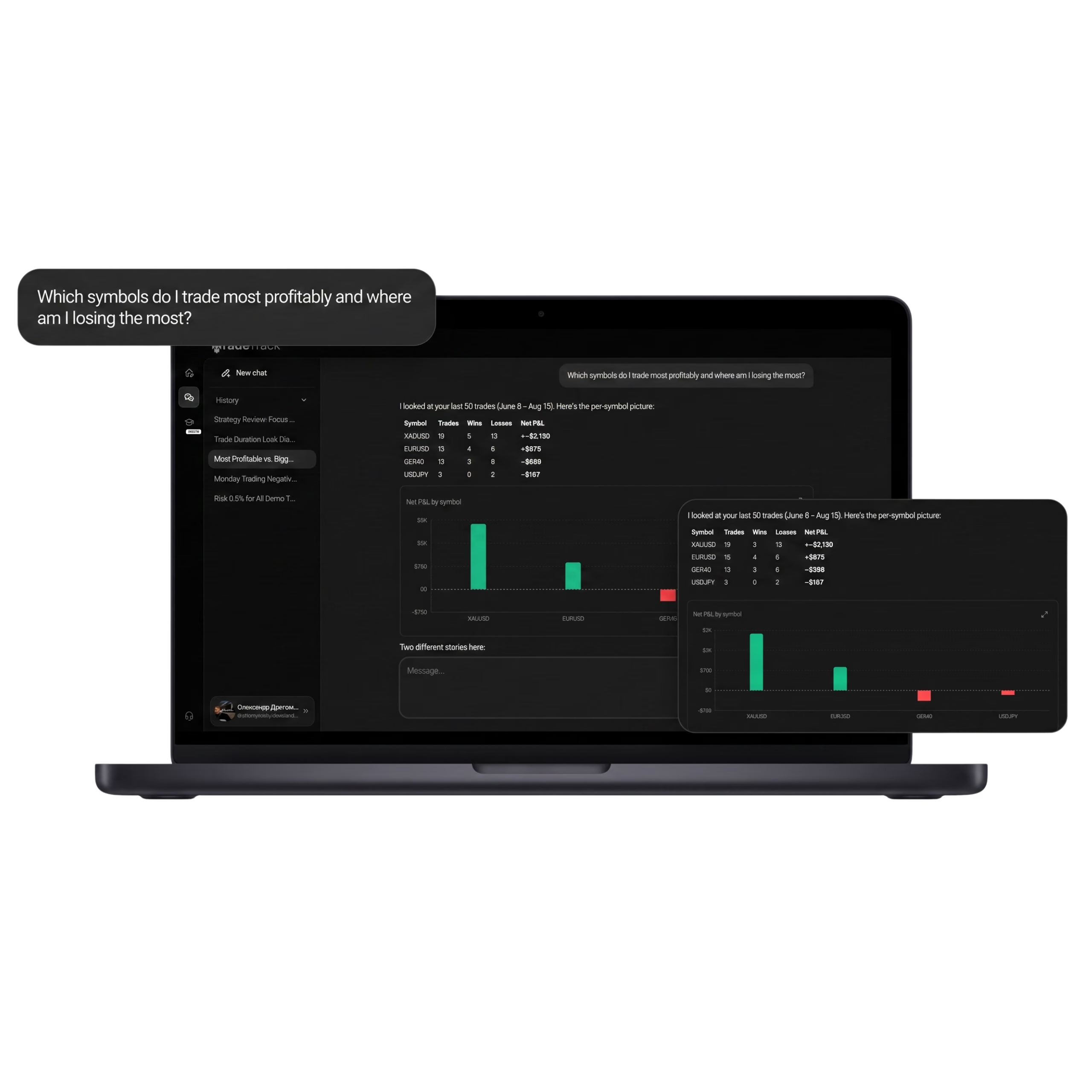
Modern trading is often fast-paced, with numerous positions being opened and closed across different market conditions. Without proper records, it can be difficult to remember the reasoning behind individual trades or identify recurring mistakes. A structured trading tracking system can help transform scattered trading information into useful performance insights. Instead of focusing only on whether a trade generated a profit or loss, traders can evaluate the decisions, strategies, market conditions, and risk factors that influenced each result.
TradeTrack is particularly relevant to the growing demand for digital trading journals and performance analysis tools. A well-organized approach to trade tracking can help traders create a detailed history of their activities, making it easier to review their strategies and improve their decision-making process. For beginners, this can provide a foundation for developing good habits, while experienced traders can use historical information to refine established strategies.
The goal of trade tracking is not to predict every market movement or guarantee profitable results. Rather, it is about creating a more structured trading process where decisions can be reviewed objectively. By combining trade journaling, performance analysis, risk management, and consistent self-evaluation, traders can develop a clearer understanding of their overall trading behavior.
TradeTrack and Smarter Trade Management
One of the most important aspects of successful trading is maintaining accurate records. A trader who does not document positions may remember the outcome of a trade but forget the details that led to the decision. This can make it difficult to determine whether a strategy genuinely works or whether a particular result was simply influenced by market conditions.
TradeTrack can be associated with a structured approach to trade management in which traders record important information about their positions. Details such as the trading instrument, entry price, exit price, position size, stop-loss level, take-profit target, market setup, and final result can provide valuable information when reviewed later.
Trade journaling also helps traders understand the difference between strategy performance and execution performance. A trading strategy may have strong potential, but poor execution can negatively affect results. Entering too early, closing a position too soon, moving a stop-loss unnecessarily, or taking a trade outside the established plan can all influence performance.
By maintaining a trading journal, traders can look beyond simple profit and loss figures. They can examine whether their decisions followed their trading plan and whether their actions were consistent with their intended strategy. This creates greater accountability and encourages traders to focus on the quality of their process.
Another advantage of organized trade tracking is improved preparation. Before entering the market, traders can review previous trading sessions and identify patterns in their performance. This may help them recognize which setups they understand best and which situations tend to produce inconsistent results.
For traders who operate across multiple markets, structured records can be even more valuable. Forex traders may compare different currency pairs, while stock traders can analyze performance across sectors or individual companies. Futures and crypto traders can similarly examine how volatility and market conditions influence their results.
The more consistently information is recorded, the easier it becomes to identify meaningful patterns. Over time, a trading journal can become a personal database that supports more informed decision-making.
Better Strategy Analysis and Trading Discipline
Strategy development is an ongoing process. Markets change, volatility changes, and the same setup may not perform identically in every environment. For this reason, traders need a reliable way to evaluate whether their approach remains effective.
TradeTrack can support this process by encouraging traders to analyze historical trading data instead of relying entirely on memory or recent results. A trader might discover that a particular setup performs well during trending markets but produces weaker outcomes during consolidation. Another trader may find that certain trading sessions generate better opportunities than others.
This type of performance analysis can help traders become more selective. Rather than taking every possible signal, they can focus on the situations that have demonstrated stronger historical performance. This does not guarantee future results, but it can encourage a more evidence-based approach to strategy development.
A trading journal can also reveal the impact of risk management decisions. Two traders may use the same entry strategy but experience very different results because one consistently risks too much capital on individual positions. Tracking position size, risk exposure, drawdown, and trade outcomes can make these differences easier to identify.
Risk management is particularly important because a series of losses can significantly affect a trading account. Traders who regularly review their historical risk behavior may become more aware of situations where they increase exposure after winning trades or attempt to recover losses through larger positions.
Discipline is another major component of trading performance. Emotional decisions can happen even when a trader has a well-designed strategy. Fear may cause premature exits, while greed may encourage excessive position sizes. Frustration can lead to revenge trading, where a trader attempts to immediately recover a previous loss.
Recording emotional conditions alongside trading activity can make these patterns more visible. If a trader repeatedly experiences poor results after deviating from a plan, the journal provides evidence that can support behavioral changes.
This is one reason a trading journal for performance improvement can be valuable. It creates a feedback loop between planning, execution, review, and adjustment. Traders can make decisions, record the results, study the evidence, and gradually refine their approach.
Over time, this process can contribute to greater consistency. Instead of judging success based on one profitable day or one losing trade, traders can evaluate their performance across a larger sample of positions.
Long-Term Growth with TradeTrack
The real value of TradeTrack and similar trading journal concepts becomes clearer when they are used consistently over an extended period. Short-term trading results can sometimes be misleading because a small number of trades may not accurately represent the effectiveness of a strategy.
Long-term records provide a broader perspective. Traders can compare monthly performance, identify recurring patterns, evaluate different strategies, and determine whether their discipline is improving. This information can support more realistic expectations and better trading planning.
For traders working toward professional development, maintaining a detailed trading history can also create a stronger sense of accountability. Each trade becomes part of a larger performance record rather than an isolated event.
A structured trading journal can also help traders distinguish between good decisions and good outcomes. A trade can lose money even when it perfectly follows the trading plan. Conversely, a trade can generate profit despite being based on poor analysis or excessive risk. Understanding this difference is essential for developing a sustainable trading process.
TradeTrack-related trade management can therefore encourage traders to evaluate the process behind each position rather than focusing exclusively on the final result. This mindset can help reduce emotional reactions to individual wins and losses.
Digital trading tools have made performance tracking more convenient than traditional handwritten journals. Traders can organize information, review historical activity, monitor key performance metrics, and maintain records in a centralized environment. However, the technology itself is only part of the solution. The quality of the information depends on how consistently and honestly the trader records their activity.
A journal that contains incomplete or inaccurate information will provide limited value. Traders should therefore make trade documentation part of their regular routine. Recording the reasoning behind a trade shortly after execution can provide more accurate information than attempting to reconstruct the decision weeks later.
For beginners, this habit can establish a foundation for disciplined trading. For experienced traders, it can provide an additional layer of analysis that supports strategy optimization and continuous improvement.
Conclusion
TradeTrack represents the broader idea of using structured trade tracking and performance analysis to become a more informed and disciplined trader. In a market environment where decisions can be influenced by volatility, emotions, and rapidly changing conditions, maintaining an accurate trading history can provide valuable perspective.
A detailed trading journal allows traders to examine their strategies, review execution quality, understand risk-taking behavior, and identify recurring mistakes. It can also help reveal successful patterns that deserve further attention. By turning previous trading activity into useful information, traders can make the review process an important part of their overall strategy.


